 NiftyNet
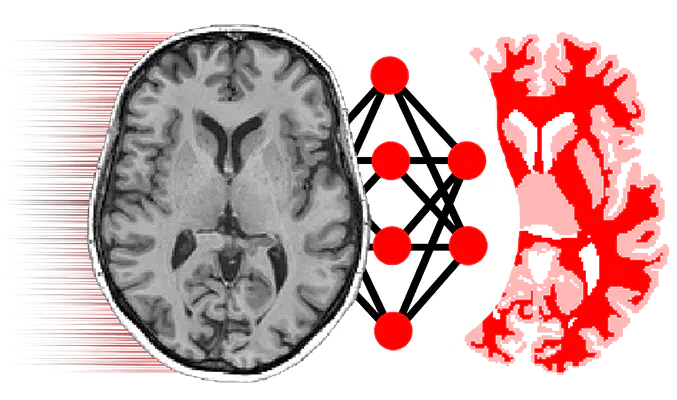
NiftyNet is a TensorFlow-based open-source convolutional neural networks (CNN) platform for research in medical image analysis and image-guided therapy. NiftyNet’s modular structure is designed for sharing networks and pre-trained models. Using this modular structure you can:
- Get started with established pre-trained networks using built-in tools
- Adapt existing networks to your imaging data
- Quickly build new solutions to your own image analysis problems
NiftyNet is a consortium of research organisations (BMEIS – School of Biomedical Engineering and Imaging Sciences, King’s College London; WEISS – Wellcome EPSRC Centre for Interventional and Surgical Sciences, UCL; CMIC – Centre for Medical Image Computing, UCL; HIG – High-dimensional Imaging Group, UCL), where BMEIS acts as the consortium lead.
Features
- Easy-to-customise interfaces of network components
- Sharing networks and pretrained models
- Support for 2-D, 2.5-D, 3-D, 4-D inputs*
- Efficient training with multiple-GPU support
- Implementation of recent networks (HighRes3DNet, 3D U-net, V-net, DeepMedic)
- Comprehensive evaluation metrics for medical image segmentation
NiftyNet is not intended for clinical use.
*2.5-D: volumetric images processed as a stack of 2D slices; 4-D: co-registered multi-modal 3D volumes
Installation
- Please install the appropriate TensorFlow package:
pip install "tensorflow==1.15.*"
pip install niftynet
All other NiftyNet dependencies are installed automatically as part of the pip installation process.
To install from the source repository, please checkout the instructions.
Documentation
The API reference and how-to guides are available on Read the Docs.
Useful links
- NiftyNet website
- NiftyNet source code on GitHub
- NiftyNet Model zoo repository
- NiftyNet Google Group / Mailing List
- Stack Overflow for general questions
Citing NiftyNet
If you use NiftyNet in your work, please cite Gibson and Li, et al. 2018:
E. Gibson*, W. Li*, C. Sudre, L. Fidon, D. I. Shakir, G. Wang, Z. Eaton-Rosen, R. Gray, T. Doel, Y. Hu, T. Whyntie, P. Nachev, M. Modat, D. C. Barratt, S. Ourselin, M. J. Cardoso† and T. Vercauteren† (2018) NiftyNet: a deep-learning platform for medical imaging, Computer Methods and Programs in Biomedicine. DOI: 10.1016/j.cmpb.2018.01.025
BibTeX entry:
@article{Gibson2018,
  title = "NiftyNet: a deep-learning platform for medical imaging",
  journal = "Computer Methods and Programs in Biomedicine",
  year = "2018",
  issn = "0169-2607",
  doi = "https://doi.org/10.1016/j.cmpb.2018.01.025",
  url = "https://www.sciencedirect.com/science/article/pii/S0169260717311823",
  author = "Eli Gibson and Wenqi Li and Carole Sudre and Lucas Fidon and
            Dzhoshkun I. Shakir and Guotai Wang and Zach Eaton-Rosen and
            Robert Gray and Tom Doel and Yipeng Hu and Tom Whyntie and
            Parashkev Nachev and Marc Modat and Dean C. Barratt and
            S\'{e}bastien Ourselin and M. Jorge Cardoso and Tom Vercauteren",
}
The NiftyNet platform originated in software developed for Li, et al. 2017:
Li W., Wang G., Fidon L., Ourselin S., Cardoso M.J., Vercauteren T. (2017) On the Compactness, Efficiency, and Representation of 3D Convolutional Networks: Brain Parcellation as a Pretext Task. In: Niethammer M. et al. (eds) Information Processing in Medical Imaging. IPMI 2017. Lecture Notes in Computer Science, vol 10265. Springer, Cham. DOI: 10.1007/978-3-319-59050-9_28
Licensing and Copyright
NiftyNet is released under the Apache License, Version 2.0.
Copyright 2018 the NiftyNet Consortium.
Acknowledgements
This project is grateful for the support from the Wellcome Trust, the Engineering and Physical Sciences Research Council (EPSRC), the National Institute for Health Research (NIHR), the Department of Health (DoH), Cancer Research UK, King’s College London (KCL), University College London (UCL), the Science and Engineering South Consortium (SES), the STFC Rutherford-Appleton Laboratory, and NVIDIA.